Four-unit Linkage, 0.03mm Precision: Accuracy Verification and Performance Advantages of Jiangsent’s Screw Synchronous Lifting Platform
Introduction
Against the backdrop of Industry 4.0, intelligent manufacturing has raised increasingly stringent requirements for equipment precision. In sophisticated high-end sectors such as intelligent casting and military assembly, tiny positioning errors can halt entire production lines or even lead to product scrapping.
As core equipment on production lines, lifting platforms are no longer simple machinery for vertical load movement. Instead, they serve as critical components guaranteeing manufacturing precision and operational stability.
I. Product Definition and Technical Principle
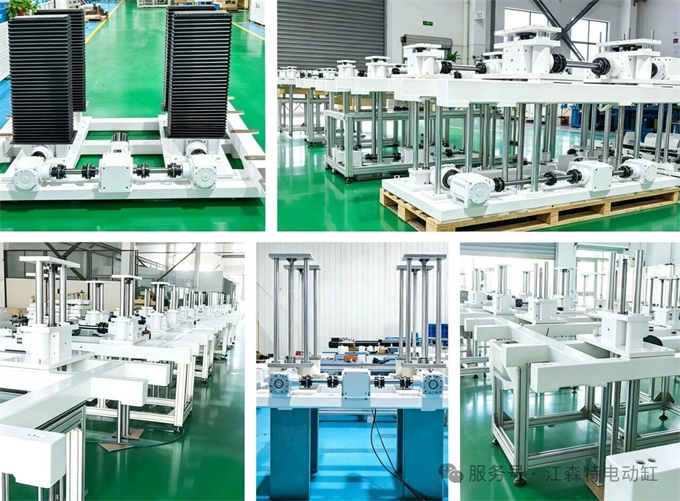
A synchronous lifting platform is an integrated lifting device centered on ball screws, paired with auxiliary components to deliver synchronized, smooth vertical motion. Such platforms support multiple linkage configurations, including dual-unit, four-unit and eight-unit linkage. This article takes Jiangsent’s four-unit synchronous lifting platform as a representative case for elaboration.
Differentiated from conventional scissor lifts and hydraulic lifting platforms, the synchronous lifting system adopts a full closed-loop control framework, with encoders or linear gratings functioning as position feedback sensors. It delivers heavy-load jacking while maintaining synchronized vertical travel and perfect horizontality of the platform tabletop.
II. Core Performance Advantages
Traditional lifting equipment mostly prioritizes load capacity. By contrast, this series of platforms from Jiangsent was developed under core design criteria: High Precision, High Stability, High Compatibility. Its four standout strengths are detailed below:
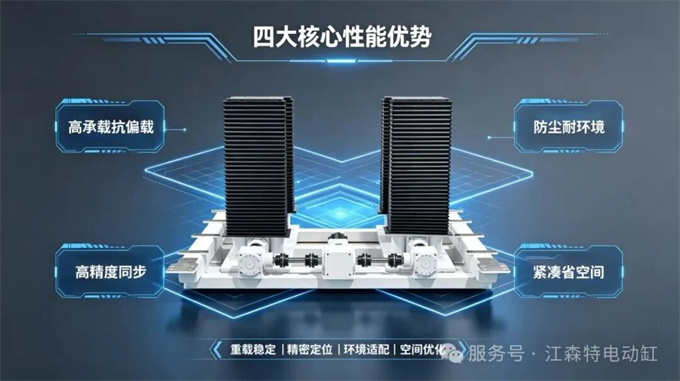
• High Load Capacity and Anti-Eccentric Load Performance:
Built with high-strength alloy frames and multi-layer vibration damping protection, the equipment boasts exceptional structural rigidity and outstanding load-bearing capacity. It features robust anti-eccentric load capability: even with unevenly placed workpieces, the system performs real-time dynamic error correction to ensure stable operation without deformation or displacement under heavy loads and frequent cycling.
• Superior Synchronization Accuracy:
The synchronous height deviation across multiple support points is controlled within ±0.05mm under full-load conditions, and the flatness of the platform tabletop is maintained above 0.03mm, delivering dynamic motion characterized by both stability and ultra-high precision.
• Strong Environmental Adaptability:
Specially engineered dustproof structures are integrated to withstand heavily dusty industrial environments, sustaining long-term reliable operation of core components and extending the service life of the equipment.
• Compact Structure & Easy Installation:
Compared with hydraulic lifting systems, it eliminates cumbersome auxiliary components including oil pumps, fuel tanks and hydraulic pipelines, resulting in a simpler, more compact mechanical layout with reduced overall size and weight to greatly save installation space. The equipment enables flexible on-site deployment and can be put into production without complicated commissioning procedures.
III. Typical Application Scenarios
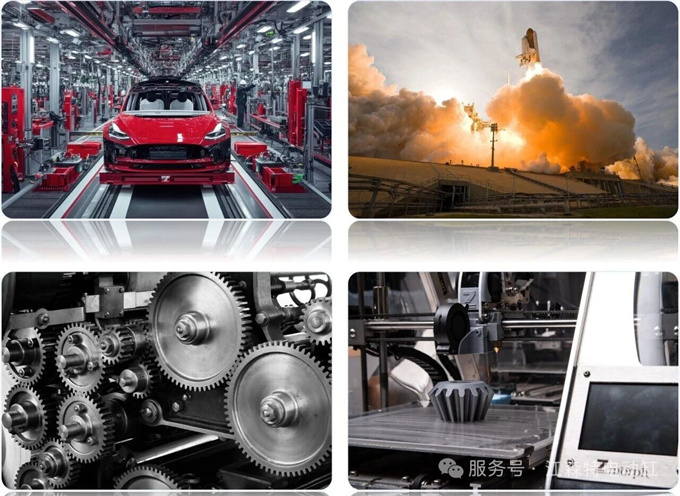
This platform targets industrial sectors demanding stringent precision, stability and environmental resistance, especially heavy-duty precision workflows such as casting and assembly.
• Intelligent Casting Industry:
Equipped with dedicated dustproof structures, the platform operates reliably in heavily dusty workshop environments and meets the high-speed cycle requirements of automated casting production lines.
• Military Assembly Industry:
Compliant with rigorous process specifications, it enables precision docking and positioning under heavy loads to guarantee consistent assembly quality.
• Precision Manufacturing Production Lines:
Suitable for automated workflows requiring multi-point synchronized jacking, precise workpiece transfer and component docking, effectively boosting overall production line yield.
• 3D Printing Industry:
Tailored to the vertical lifting demands of the forming platforms on large-format industrial 3D printers. Multi-point synchronized driving maintains full-table horizontality and uniform layer height control throughout travel. It effectively mitigates common defects including printed part warpage and uneven layer lines, drastically improving forming precision and finished product yield for large complex components.
IV. Positioning Precision Testing of Synchronous Lifting Platforms
Before delivery, every synchronous lifting platform manufactured by Jiangsent undergoes precision verification via laser trackers operated by third-party testing institutions with official metrology and calibration qualifications.
On-Site Test Results
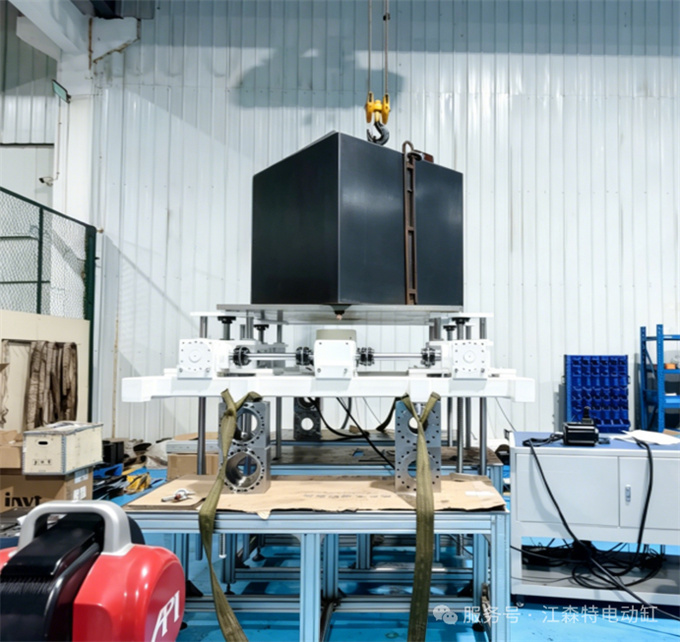
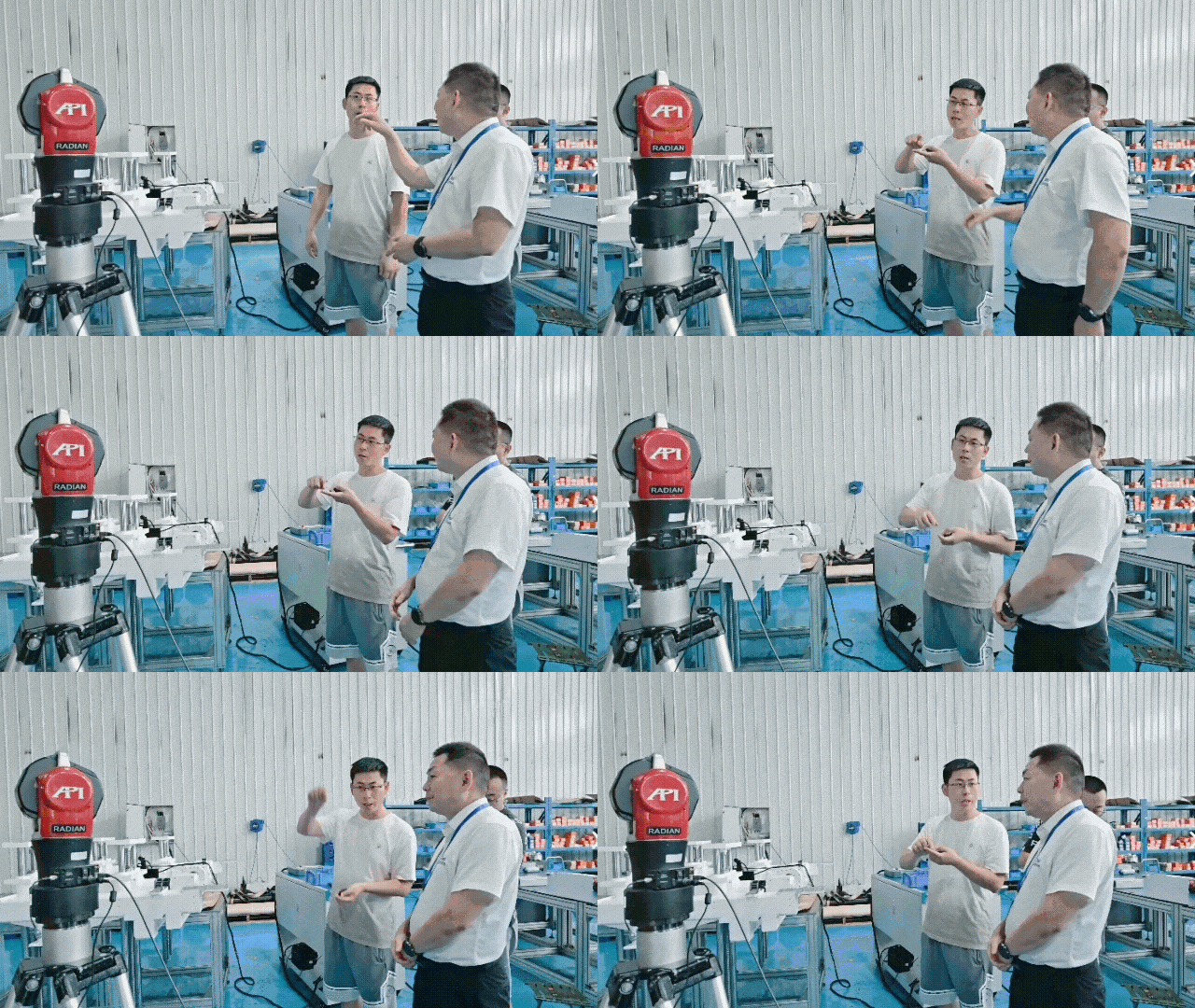
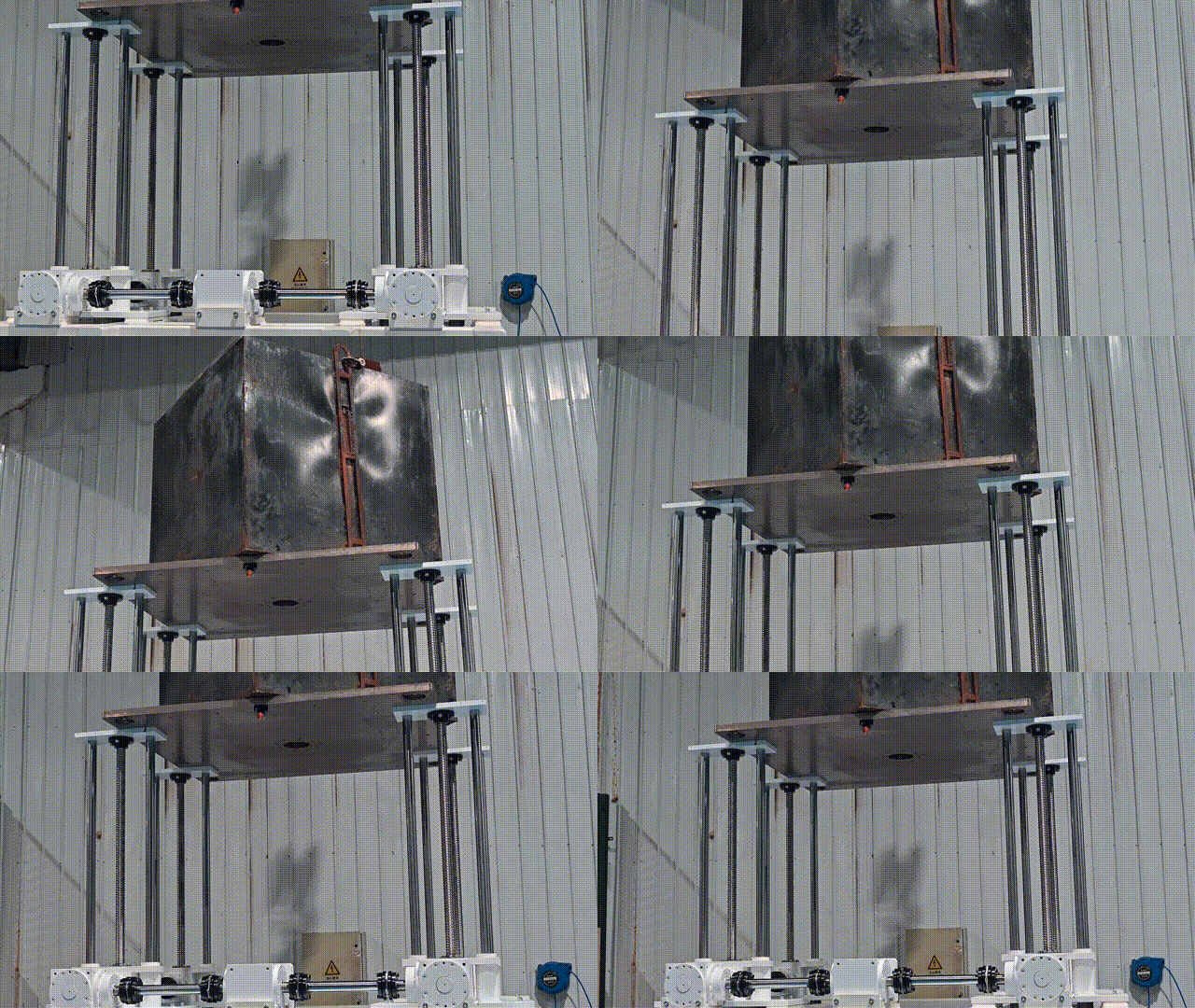
Test data under standard operating conditions shows a repeat positioning accuracy of 0.03mm and absolute positioning accuracy of 0.05mm. The full-stroke movement is smooth with negligible jitter, overshoot and operational noise; the actual motion trajectory curve aligns closely with theoretical values. Under full-load operation, the rigid structure remains stable with minimal geometric deviation.
For intuitive reference: 0.03mm is approximately one-third the diameter of a human hair, while 0.05mm equals roughly half a hair’s diameter. The equipment delivers consistent, precise, repeatable reciprocating motion even within such ultra-tight tolerance bands — a proven performance verified by physical testing.
Customized Solutions from Jiangsent
In an era of rapid technological iteration, uncompromising commitment to product quality lays the foundation for long-term enterprise development. Jiangsent Automation Technology possesses extensive engineering experience in servo electric cylinders, multi-stage cylinders and 6-degree-of-freedom motion platforms. Beyond standard off-the-shelf products, we provide customized model selection and system integration solutions tailored to customers’ unique working conditions.